
Load safety
Securing loads: practical checks before the wheels turn
Safe load restraint starts with a stable load, suitable equipment and clear agreement between the consignor, operator and driver.
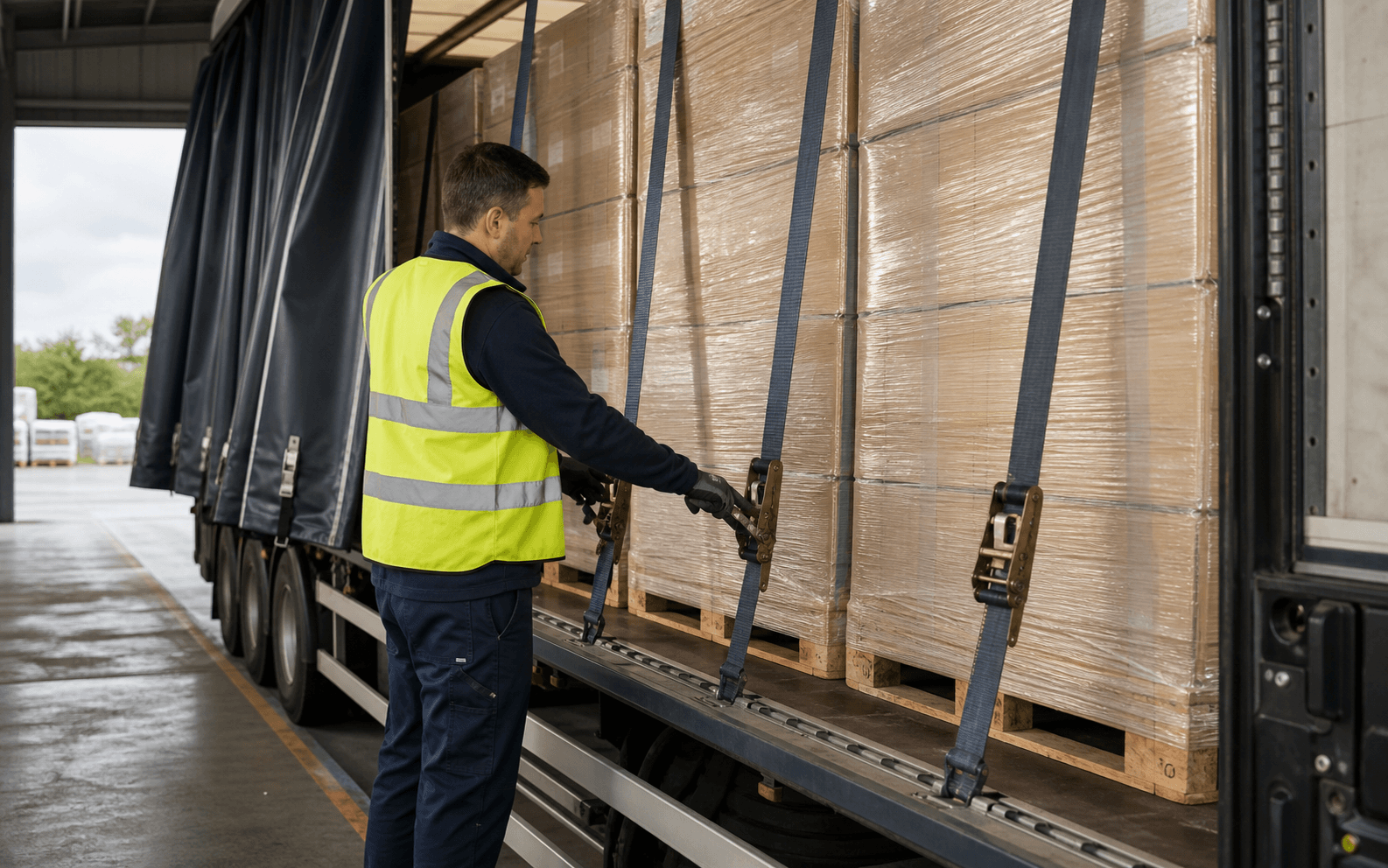
Curtains, doors and packaging do not automatically make a load secure. The restraint method has to control the forces created by braking, steering and normal road movement.
Agree the loading plan
The consignor, operator and driver should understand who controls loading and which securing method is suitable for the goods and vehicle. Instructions need to cover loading position, restraint equipment and any checks required during the journey.
A load should be stable before lashings are added. Gaps, weak packaging or unsuitable stacking can allow movement that straps alone may not safely correct.
Match equipment to the load
Use rated anchor points and restraint equipment in serviceable condition. Headboards, chocks, blocking, positive fit and lashings perform different jobs, and the right combination depends on the load type, weight and vehicle body.
Respond safely to movement
If a load shifts, stop in a safe place and assess it without standing where goods could fall. Do not open doors or curtains when they may be holding an unstable load in place.
Site instructions should make escalation clear before a driver leaves. Knowing who can authorise re-securing, where specialist help is available and how an unsafe vehicle will be isolated avoids hurried decisions at the roadside or delivery point.
- Check straps, chains and anchor points before loading
- Recheck tension when the load or journey requires it
- Quarantine an unstable vehicle until a safe unloading plan is agreed